
More than half of managed honeybee colonies were lost in both 2023–24 and 2024–25 — Why midsummer is the most dangerous time for bees, and what you can do about it in 10 seconds.

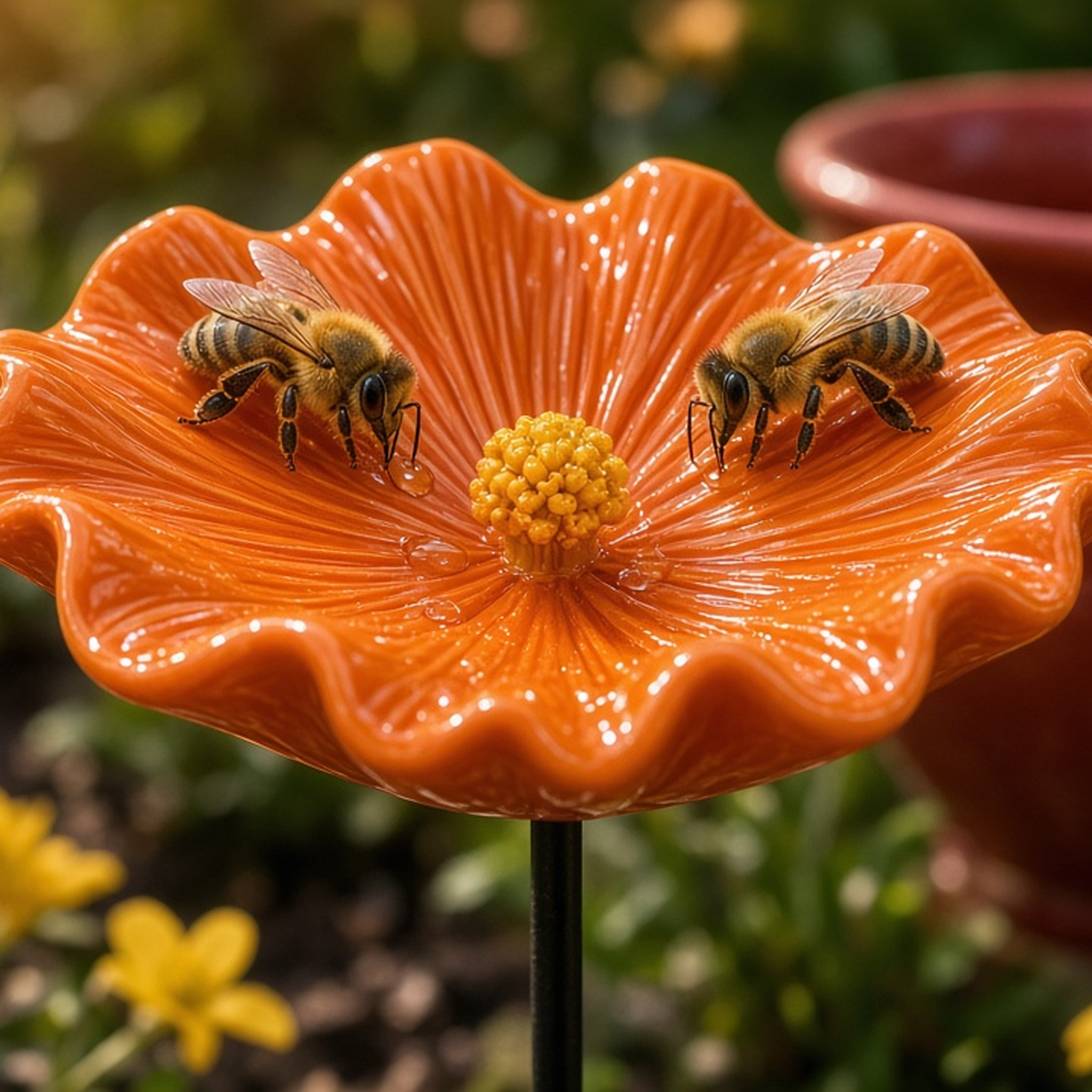
The summers have gotten quieter. The steady hum that used to fill every garden is missing in many neighborhoods now. In both 2023–24 and 2024–25, U.S. beekeepers lost more than half of their managed honey bee colonies. Those were the highest losses since the national U.S. Beekeeping Survey began tracking full-year losses in 2010.
Pesticides, monoculture, habitat loss — the familiar reasons. But there's one that rarely gets mentioned: on a hot summer day, a single colony needs up to half a gallon of water — just to cool the hive. And most backyards don't have a single safe spot that can provide it.
Half a gallon. Every day. Just to survive.
In extreme heat, foraging stops. Water collectors fly out instead — farther and farther, because clean sources dry up first. The small trickles. The dew on leaves. The damp meadow edge. They carry the water back. Other bees evaporate it with their wings — a biological air conditioner. When water collectors have to search too long, they exhaust themselves. Some don't come back. The colony weakens during the weeks when it's under the most stress. Quietly. Invisibly.
It wouldn't take much. A clean, safe spot within flying range. Beekeepers have known this for generations. In most backyards, it's been forgotten.
Good intentions aren't enough — why most water sources fail
The birdbath is built for birds, not bees. The rim is too steep, too slick — bees slip, drown, or fly on.
The open bowl on stone or concrete overheats within hours. By afternoon, it's empty.
The backyard pond comes closest — but bees don't like open water without a foothold.
The street puddle is what's left. Bees find it because nothing else is there. But asphalt puddles contain tire residue and motor oil.
Meet Bee Blossoms
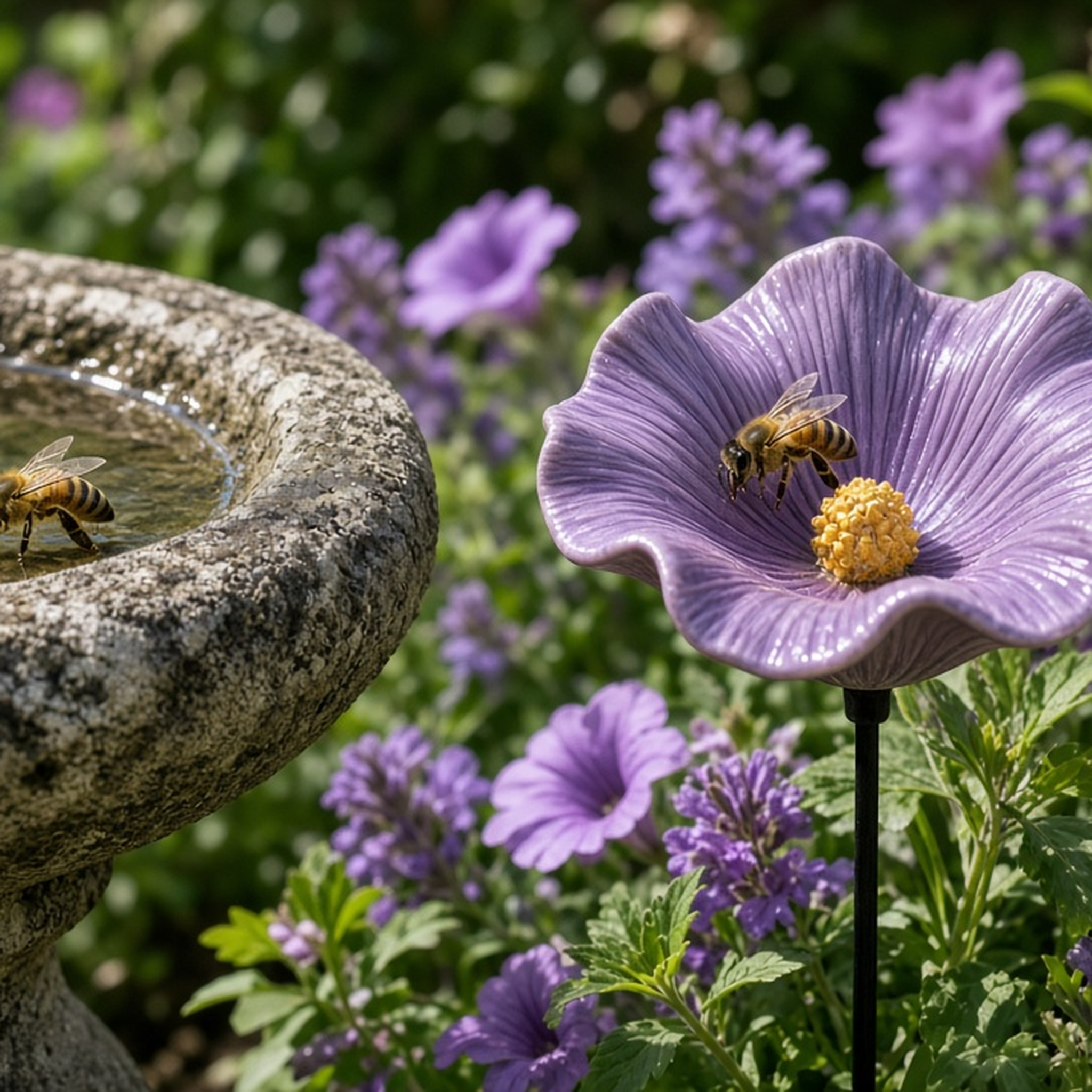
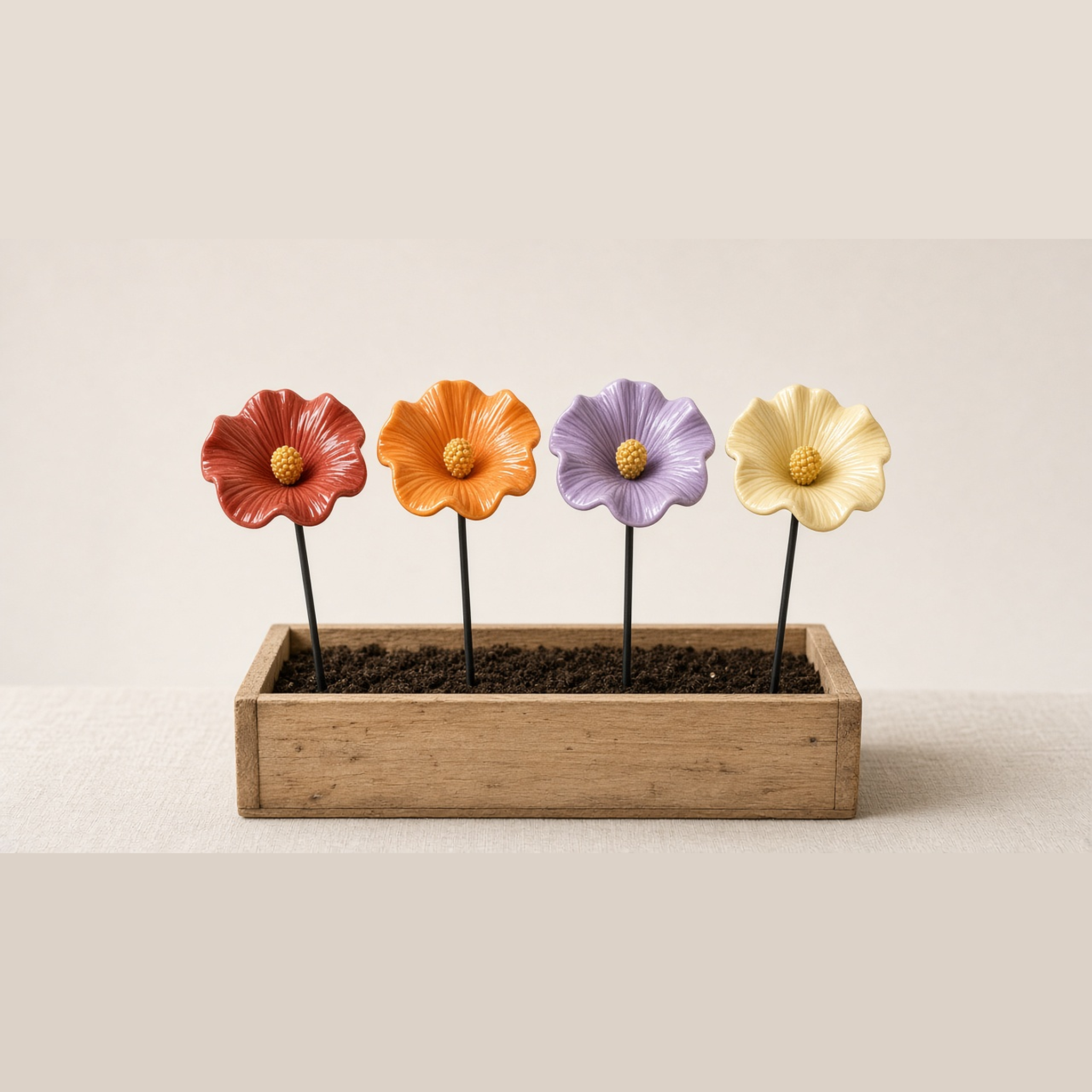
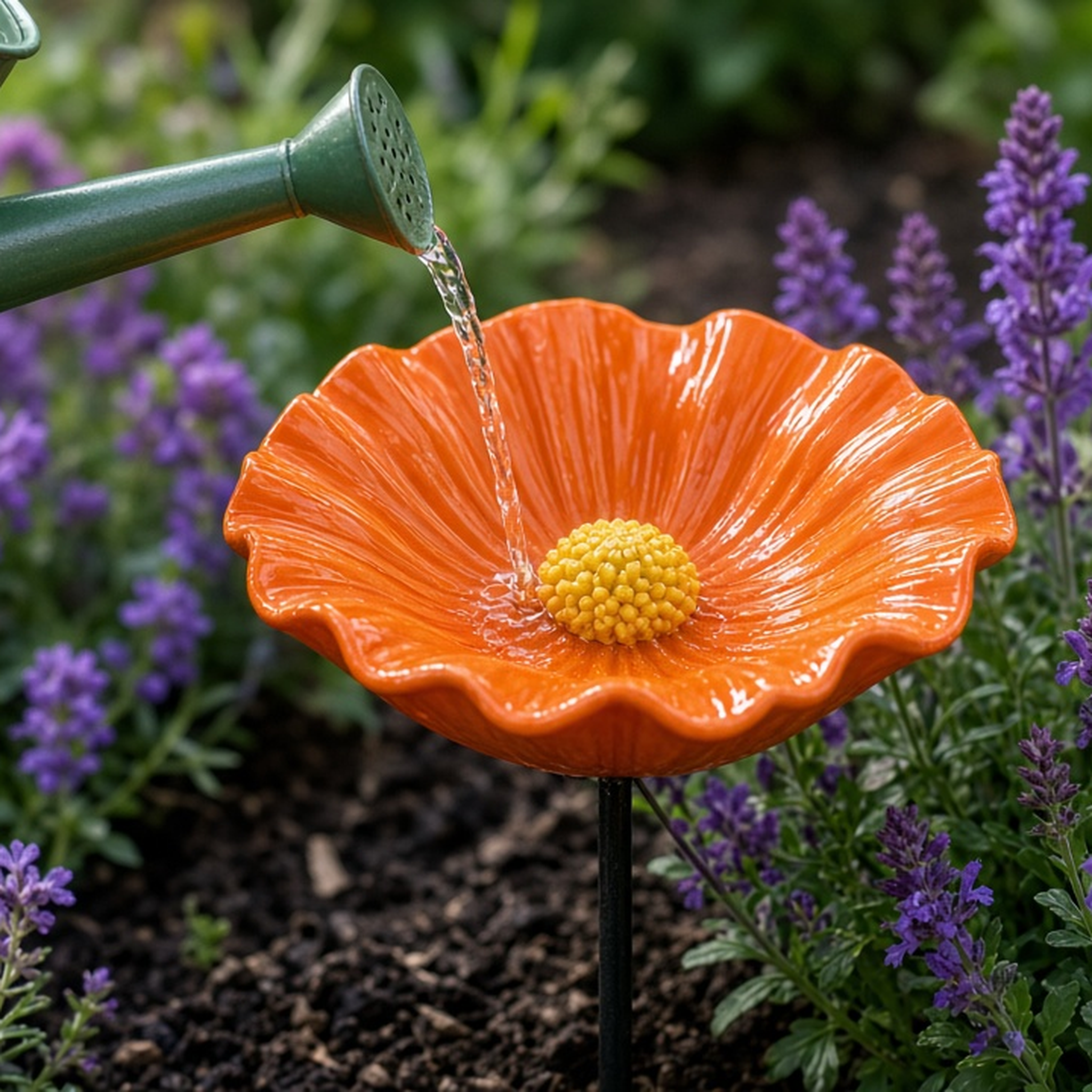
Bee Blossoms are ceramic poppy bowls on metal stakes. They sit in the flower bed at bloom height, so they blend in with the plants around them. Water collects in the ruffled petals around a raised yellow center, and the ridged glaze gives bees a place to land and drink.
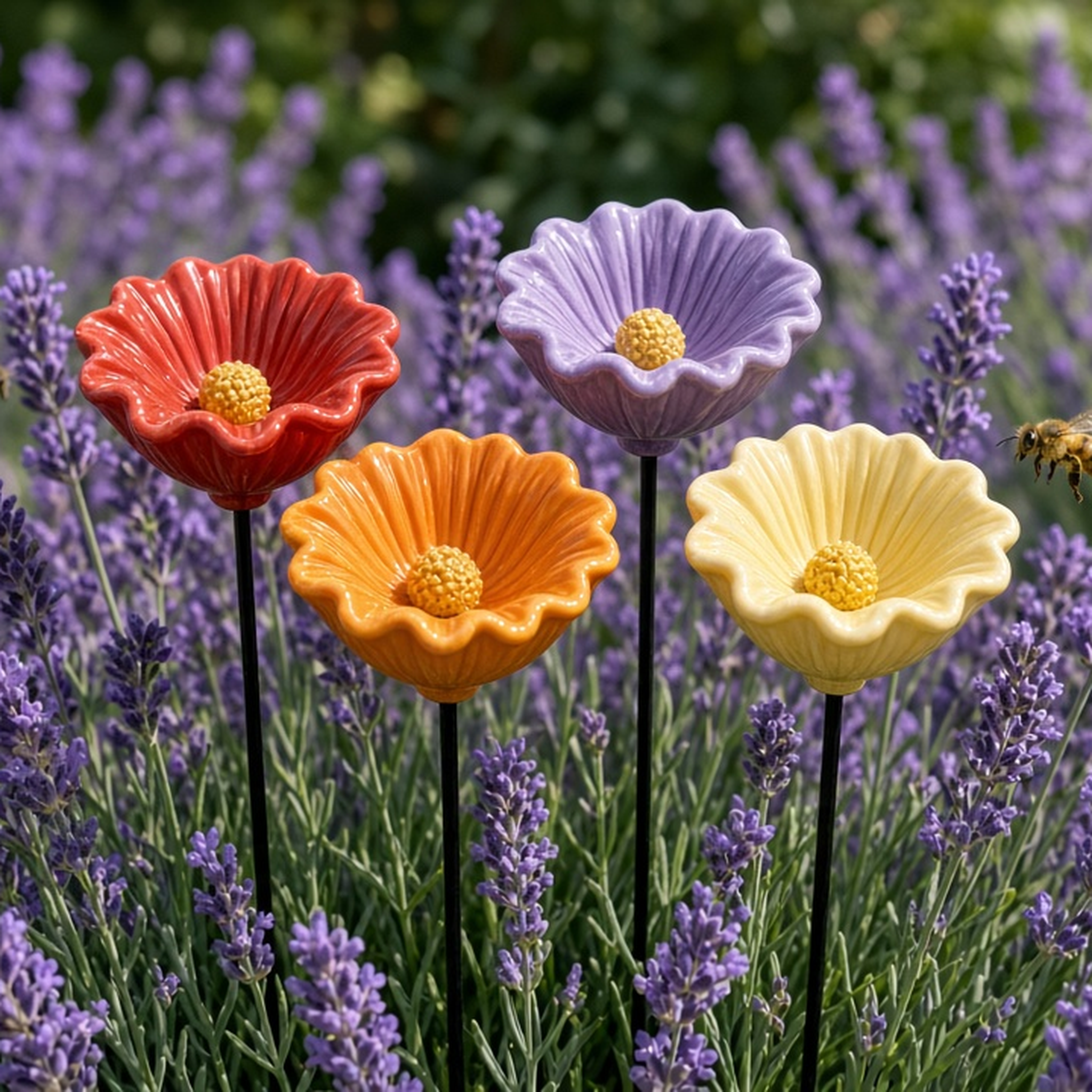
On hot days, honeybees carry water back to the hive and fan it with their wings to cool the colony. When nearby water dries up, they fly farther for it, and they use up energy the colony needs.
What bees actually need is shallow, clean water with something to grip, set down among the plants they already visit.
What makes these bowls special
- Water collects in the ruffled petals around the raised yellow center.
- The ridged glaze gives bees something to grip while they drink, and there's room for a few at once.
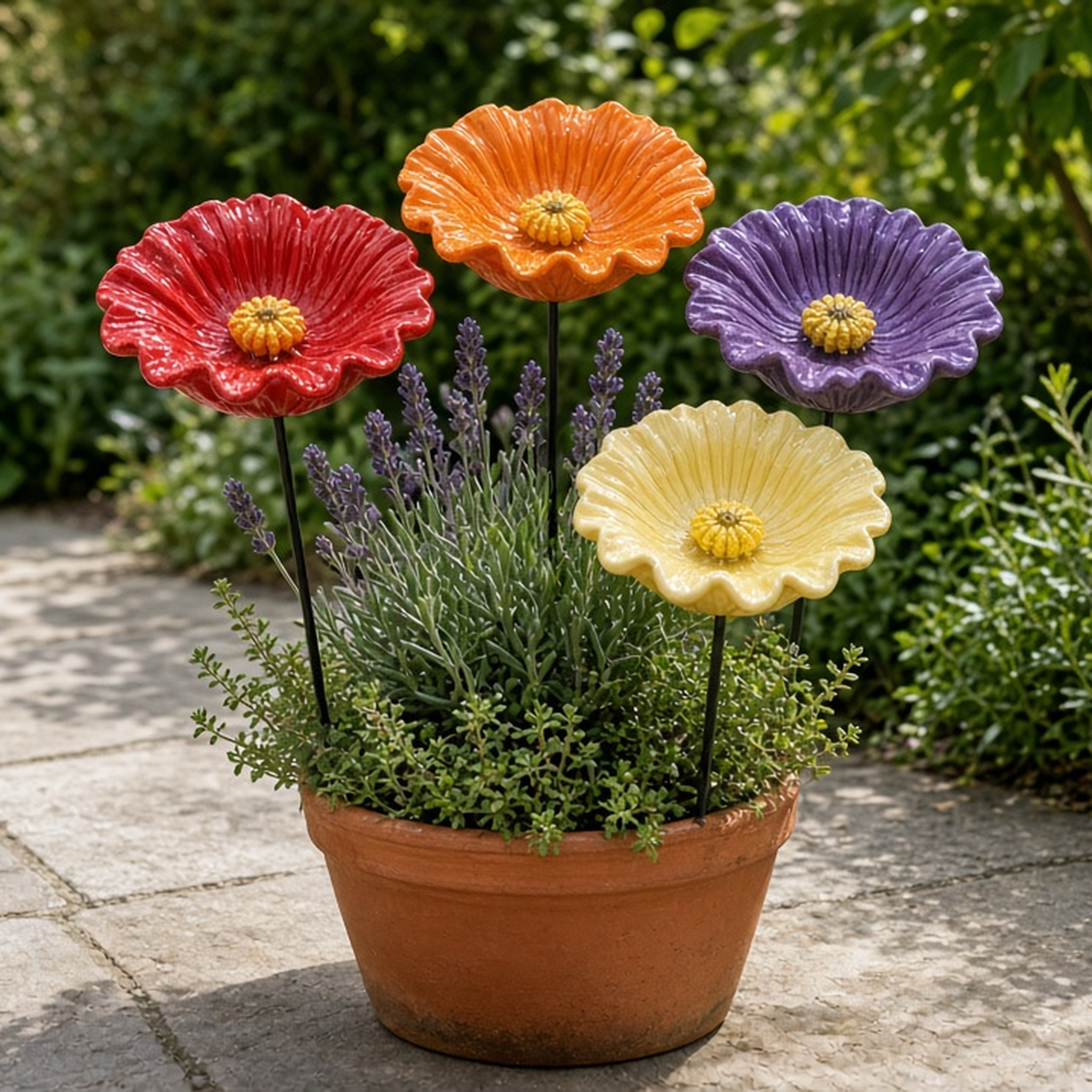
- Blends into the flower bed — on its stake among real blooms, each bowl looks like one more flower.
- Refills in seconds — tip the watering can over it and you're done.
- Glazed ceramic — the glaze gives the bowl a surface that's easy to rinse clean.
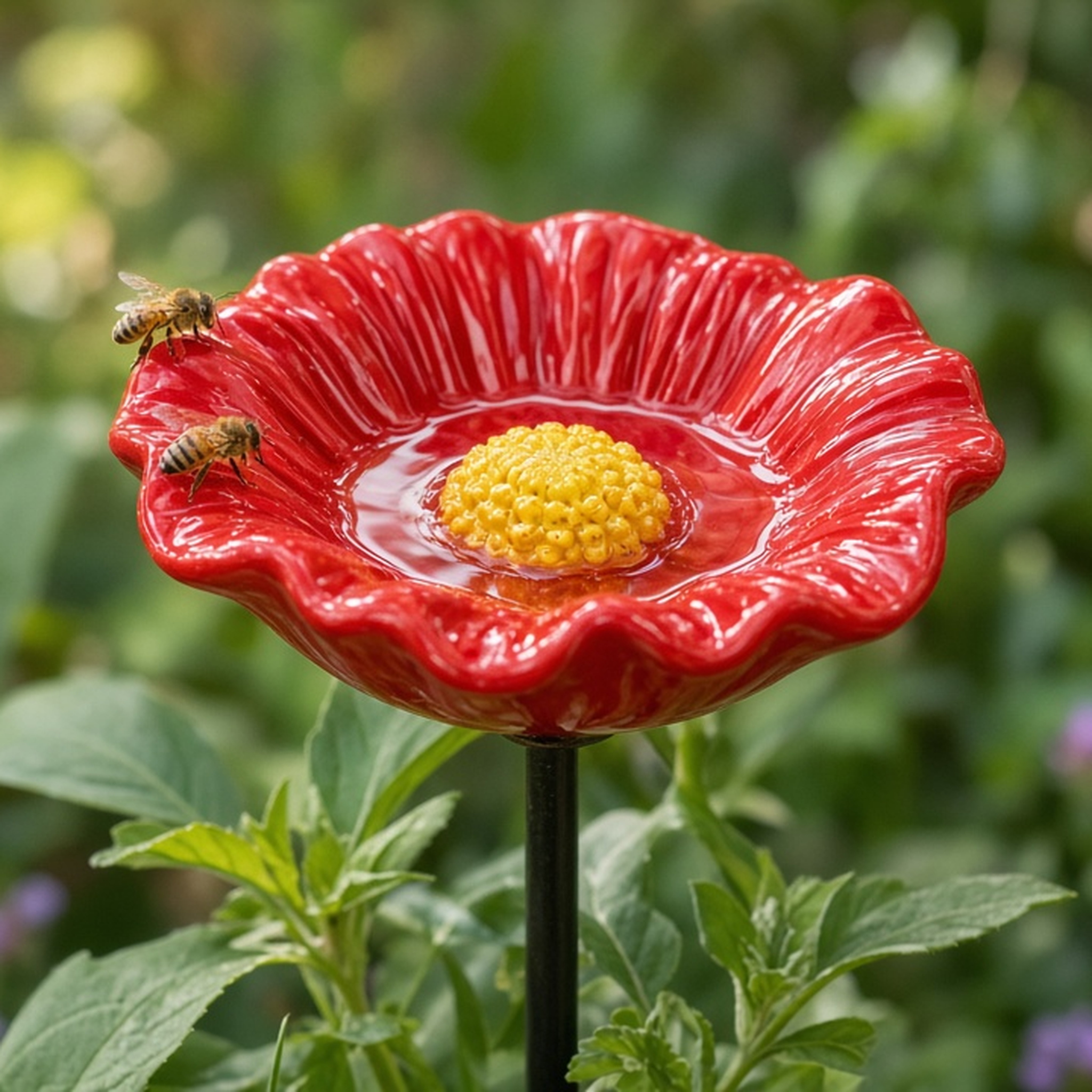
They look like flowers, and that's the point.
- Bloom-height stakes — tuck into beds, borders, and patio pots.
- Ceramic poppy bowls — water sits in the ruffled petals around the raised yellow center, and every bowl is glazed a little differently, so no two look exactly alike.
- Flower bed shade advantage — water evaporates far slower than in open bowls on concrete.
- Clean water, easily refilled — ten seconds with the watering can.
- Blossom shape as signal — works for bees like a natural landing pad.
- Set of 4 — red, orange, purple, yellow.
Good to know
How to set them up
Push the stakes into the soil near the flowers bees already visit. A little shade keeps the water from drying out as fast. Top them up with fresh water every morning, especially during a heat wave. The bowls are needed now — not in fall. In midsummer, when a colony needs half a gallon daily and the water collectors are flying too far. Available at Craft Barn Co.
30-Day Returns on Unused Sets
Not happy? Return unused sets within 30 days for a refund.
Set includes 4 ceramic poppy bowls on metal stakes in random colors (red, orange, purple, yellow). For garden, patio, balcony. Free shipping. Delivered in 7 to 14 business days.